
A Newborn Essentials Checklist for New Parents
Preparing for your baby's arrival is exciting, but knowing what you actually need can feel overwhelming. With so many newborn products, baby gadgets and beautifully designed accessories to choose from, it's easy to wonder where to start.
The good news? You don't need to buy everything before your baby arrives.
A few practical essentials will help you care for your newborn in those first precious weeks. From soft baby clothes and nappies to a safe place to sleep, feeding supplies and versatile muslin blankets, this newborn checklist will help you prepare without overfilling your home or your shopping basket.
Whether you're getting ready for your first baby or adding to your growing family, here's what to have ready before your little one arrives.
Newborn Essentials Checklist: What Do You Really Need?
Before we get into the details, here's a quick checklist of the main things to prepare.
Baby clothes for the first few weeks
Nappies and changing essentials
Feeding supplies for your chosen feeding method
A safe sleep space and suitable bedding
Muslin cloths or swaddle wraps
A suitable newborn car seat if travelling by car
A pram or suitable way to get out and about
Basic bathing and personal-care supplies
A few comforting extras and keepsakes
You can build on this list as you get to know your baby. Every family is different, and many products marketed as must-haves are simply optional extras.
1. Baby Clothes: Keep the First Wardrobe Simple
Newborns grow quickly, so there's no need to fill drawers with tiny outfits before your baby arrives. Start with a small selection of comfortable clothes that are easy to put on, take off and wash.
What you'll need:
Around 6 sleepsuits or babygrows
Around 4–6 vests or bodysuits
A couple of cardigans or warm layers, depending on the season
Socks or booties
A weather-appropriate hat for outings
A few spare outfits for unexpected changes
Choose soft, practical fabrics and easy fastenings. Think about the time of year your baby will arrive and whether you'll be spending most of your time indoors or heading out regularly.
It's also worth resisting the temptation to buy everything in newborn size. Babies come in different sizes, and some will outgrow their first clothes surprisingly quickly.
2. Nappies and Changing Essentials
Newborns need frequent nappy changes, so it's helpful to have a simple changing station ready before you come home.
What you'll need:
Newborn disposable nappies or reusable cloth nappies
Cotton wool or suitable fragrance-free wipes
A changing mat
A few spare changes of clothes
Nappy bags for outings, where appropriate
A barrier cream if recommended or needed
You don't need a complicated changing table setup. A clean, safe changing surface and a basket of essentials can make those many daily changes much easier.
Keep everything within reach before you begin changing your baby, and never leave your baby unattended on an elevated surface.
3. Feeding Supplies for Your Baby
Your feeding checklist will depend on whether you plan to breastfeed, express milk, use infant formula or combine feeding methods.
If you're breastfeeding
You may find these items useful:
Nursing bras and comfortable feeding clothes
Breast pads
Muslin cloths for burping and everyday spills
A breast pump if you plan to express milk
Milk-storage containers if expressing
A feeding pillow can be helpful for some parents, but it isn't essential for everyone. You can wait to see what makes you most comfortable.
If you're bottle-feeding
Consider preparing:
Feeding bottles and suitable teats
A bottle brush
Appropriate sterilising equipment
Infant formula and safe preparation supplies, if using formula
Follow local health guidance and the manufacturer's instructions for preparing and storing feeds safely.
Why muslin cloths are handy
Feeding a newborn can be wonderfully messy. Muslin cloths are lightweight, absorbent everyday helpers that can be kept near your feeding chair, in your changing bag or beside the sofa.
Having a few clean cloths close by means you're less likely to find yourself searching for one just when you need it.
4. A Safe Place for Your Baby to Sleep
Sleep preparation is one of the most important parts of getting ready for your newborn.
Your baby needs a separate, safe sleep space, such as a suitable cot or bassinet, with a firm, flat mattress that fits correctly.
Your sleep essentials checklist:
A safety-compliant cot or bassinet
A firm, flat, well-fitting mattress
Fitted sheets suitable for the mattress
An appropriate baby sleeping bag or other locally recommended sleepwear
For every sleep, place your baby on their back in their own clear sleep space. Keep pillows, duvets, soft toys, cot bumpers and loose bedding out of the sleep area.
It's also important to distinguish between a muslin wrap used appropriately for swaddling and a loose blanket used as bedding. Never leave a loose muslin blanket in your baby's sleep space. If you choose to swaddle, follow current safe-swaddling advice, avoid overheating, and stop as soon as your baby shows signs of attempting to roll.
A beautifully prepared nursery is lovely, but your newborn doesn't need lots of sleep accessories. A safe, simple setup is what matters most.
5. Muslin Blankets and Cloths: Small Essentials With Lots of Uses
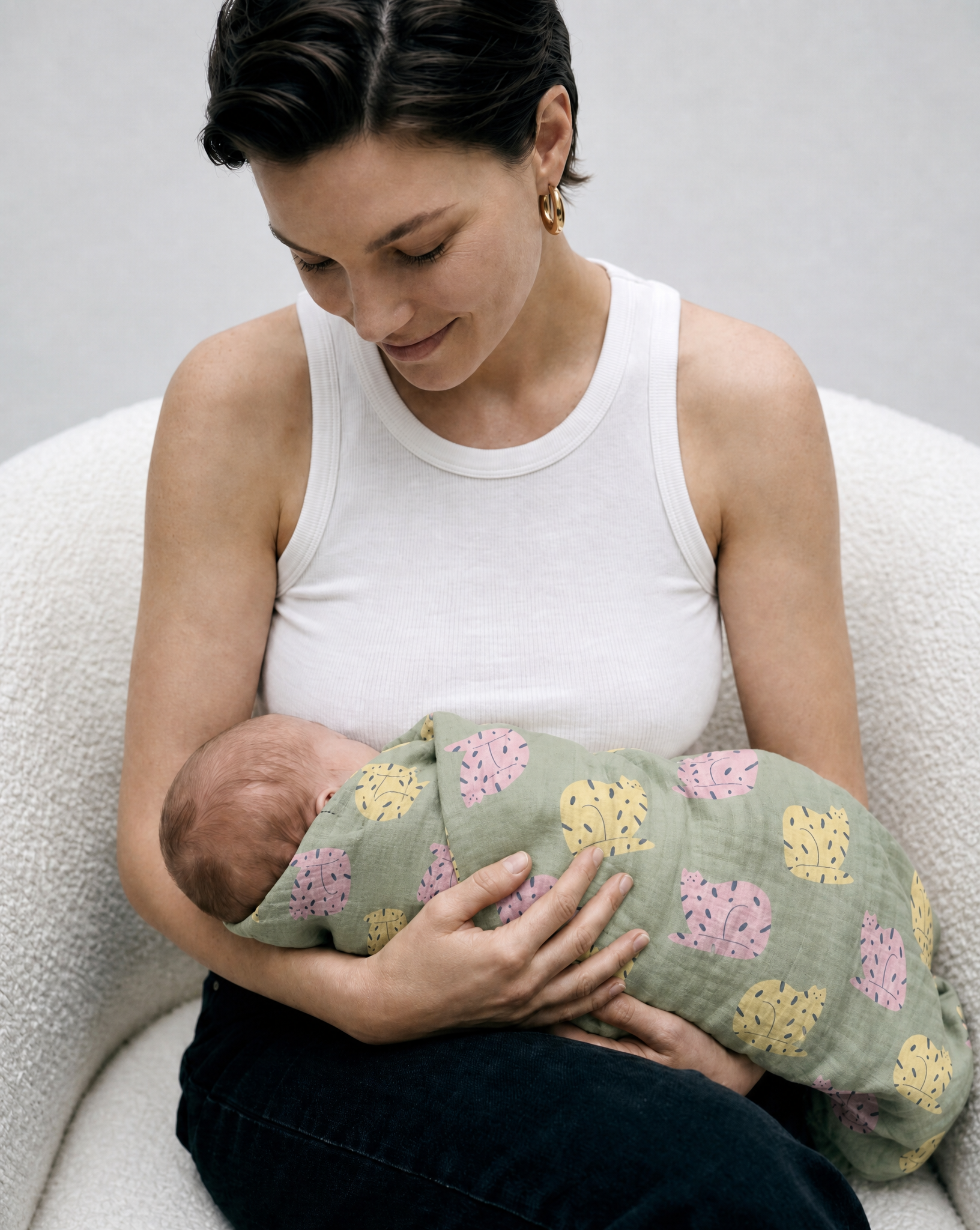
Some baby products are useful for a very specific stage or situation. Muslin blankets and cloths, on the other hand, can become familiar parts of everyday family life.
Lightweight cotton muslin is popular with parents because it is soft, breathable and easy to carry. Depending on the product's size and intended use, muslins can help with burping, feeding-related spills, supervised everyday care and appropriate swaddling.
How many muslin cloths or blankets do you need?
There's no single perfect number, but a small collection is a sensible starting point. A few smaller muslin cloths for feeding and burping, alongside one or two larger muslin wraps if you plan to use them, can give you flexibility without buying too much upfront.
You'll quickly learn which sizes and styles you reach for most often.
Choosing an organic cotton muslin
If you're shopping for baby textiles, look at the fabric composition, care instructions and product certifications. Organic cotton may appeal to families who prefer organic fibres, while lightweight construction and easy washing can be practical considerations for everyday use.
At Solstice Stories, our 120 × 120 cm organic cotton muslin swaddle blankets combine a generous size with distinctive prints, bringing a thoughtful design touch to a practical baby essential.
Explore our organic cotton muslin blankets to find a print you love for your own family or a thoughtful gift for new parents.
Always use any baby wrap or blanket according to its specific instructions and current safe-sleep guidance.
6. Getting Out and About With Your Newborn
You don't need to plan elaborate outings in the early weeks, but having a few essentials ready makes leaving the house easier.
Useful items include:
A correctly fitted newborn car seat if travelling by car
A pram or pushchair suitable for a newborn
A changing bag
Spare nappies and clothes
Muslin cloths
Weather-appropriate clothing
A suitable sunshade or rain cover for your pram
If you plan to use a baby carrier or sling, choose one suitable for your baby's age and size, and learn how to position your baby safely so their face remains visible and their airway stays clear.
Never cover a pram with a loose muslin blanket to provide shade, as this can cause overheating. Use a suitable shade designed for the pram and ensure adequate ventilation.
7. Bathing and Basic Baby Care
Your newborn doesn't need an extensive collection of bath products. A few basics will help you keep your baby clean and comfortable.
Start with:
Soft baby towels
Gentle facecloths
A baby bath or another suitable, stable washing setup
Clean nappies and clothes
A digital thermometer suitable for infants
Baby nail-care equipment designed for newborns
You won't necessarily need to bathe your baby every day - follow your midwife's or health professional's advice. Keep skincare simple and seek professional advice if your baby develops a rash or other skin concern.
8. A Few Special Things to Treasure
Alongside the practical essentials, you might like to prepare a few items that make the early days feel personal.
These don't need to be expensive. A favourite outfit, a photograph from your baby's first days, a handwritten note or a journal for recording milestones can become meaningful reminders of a stage that often passes in a blur.
A baby journal can help you record little details such as your baby's arrival, first visitors, first smiles and the funny moments you don't want to forget.
At Solstice Stories, we believe the everyday details of family life are worth remembering. Our baby journals are designed for families who want to preserve those early memories alongside the practical things they use every day.
A thoughtful keepsake can also make a lovely baby shower or new-arrival gift, especially when you're looking for something a little more personal than another outfit.
9. What Can You Wait to Buy?
One of the easiest ways to prepare for a new baby without overspending is to separate essentials from optional extras.
You can often wait until you know your baby's needs before buying:
Lots of toys and entertainment products
Large quantities of newborn-sized clothing
Specialist feeding accessories you may not use
Multiple blankets and decorative nursery accessories
Gadgets designed to solve problems you haven't encountered
Consider borrowing or buying suitable second-hand items where safe. However, carefully check the condition and current safety standards of any second-hand equipment. A car seat's history can be difficult to verify, and a new mattress is generally recommended when reusing a cot or bassinet.
Your home doesn't have to be completely transformed before your baby arrives. Focus on the essentials first, then adapt as you go.
10. Your Newborn Essentials Checklist, Simplified
If you're feeling overwhelmed, return to the basics.
Before your baby arrives, aim to have:
Enough clean clothes for the first few days.
Nappies and changing supplies.
Your feeding essentials ready.
A safe sleep space.
A suitable car seat if travelling by car.
A few practical textiles, such as muslin cloths and wraps.
Basic bathing supplies.
A small bag of essentials for outings.
Any important health or care supplies recommended by your midwife or healthcare professional.
Everything else can be added when you know what works for your family.
The newborn stage is full of new routines, surprises and little moments that become treasured memories. Preparing a few essentials ahead of time can help you spend less energy worrying about what you've forgotten and more time getting to know your baby.
Frequently Asked Questions
What does a newborn baby need in the first few weeks?
A newborn needs suitable clothing, nappies, feeding supplies, a safe sleep space, basic care items and a safe way to travel. Muslin cloths can also be useful for feeding-related spills and everyday care. You can add optional products as you discover what works for your family.
How many baby clothes should I buy before birth?
A small initial collection is usually enough. Around six sleepsuits and four to six vests or bodysuits can be a useful starting point, alongside a few weather-appropriate layers. Laundry access, your baby's size and the season will influence how many you need.
Are muslin blankets essential for a newborn?
They aren't strictly essential, but many parents find muslin cloths useful for burping, feeding-related spills and everyday care. Larger muslin wraps may also be useful when used for their intended purpose and in line with safe-swaddling guidance.
What should I buy before my baby arrives?
Prioritise a safe sleep space, suitable clothing, nappies, feeding supplies and a car seat if you will be travelling by car. Have enough essentials ready for the first few days, then buy additional items when you understand your family's needs.
What makes a good newborn baby gift?
Useful textiles, practical newborn essentials and meaningful keepsakes can all make thoughtful gifts. A muslin blanket offers everyday practicality, while a baby journal gives parents a place to record the memories and milestones of their child's early years.
Do I need to buy everything new for my baby?
No. Some items, such as suitable clothing and certain toys, can often be borrowed or purchased second-hand if they're clean and safe. Carefully check safety standards and condition for equipment, and take particular care with car seats and mattresses.
Prepare for the Little Moments
You don't need to buy everything to be ready for your baby. Start with the essentials, choose products that suit your family's everyday life, and leave room to discover what you love as you go.